
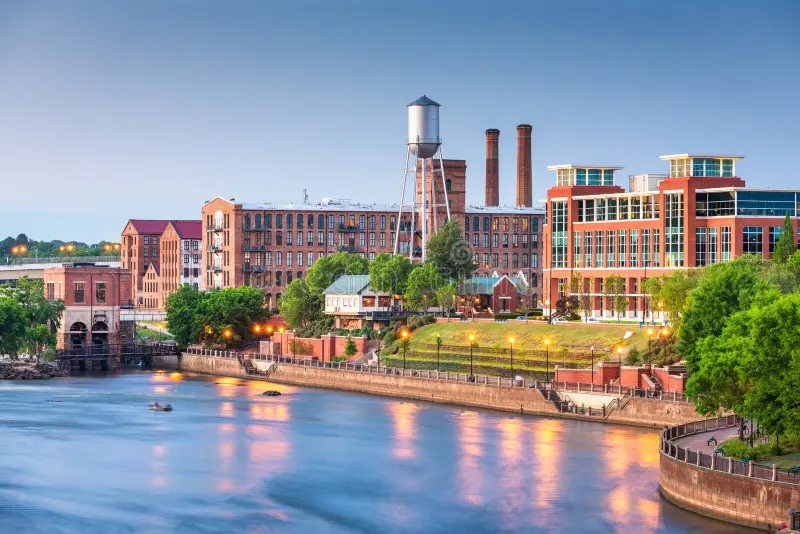

A plain-English guide for Columbus, Georgia residents
Part 1: What Is a Tax Allocation District — and How Does It Work?
Welcome to TAD for Dummies, an easy to understand, six part series designed to educate readers about how things work in development and taxation in Columbus GA. Starting today, and for the next five days, we will publish the following installments:
- Part 1: What is a TAD and how does it work?
- Part 2: How is the TAD amount determined, and why are some TADs bigger?
- Part 3: Race, gentrification, and who a TAD really serves
- Part 4: Would changing the TAD rules have a chilling effect on development?
- Part 5: South Commons, The Battery, and capital taking the path of least resistance
- Part 6 (this installment): Wins and losses — a report card on the whole program
The One-Sentence Version
A Tax Allocation District — or TAD — is a way for Columbus to fix up a rundown or neglected area without raising taxes on everyone else. The city uses the extra tax money that new development creates to pay for the very improvements that made the area worth developing in the first place.
That probably still sounds a little abstract, so let’s break it down.
What Is a Tax Allocation District?
A Tax Allocation District (TAD) is an economic development tool used by the Columbus Consolidated Government to revitalize areas that are blighted, abandoned, or just sitting unused. Georgia created the legal framework for TADs in 1985, and Columbus was actually the first city in the state to use one.
If you’ve heard the term Tax Increment Financing (TIF) — which is used in most other states — a TAD is the same concept with a Georgia name.
The big idea: instead of raising taxes or raiding the city’s general fund to fix a struggling area, the city invests in infrastructure improvements now, and pays for them later using the extra tax revenue that those improvements generate.
💡 Think of It Like This
Imagine a vacant, weedy lot in your neighborhood. Right now it generates almost no property tax because it’s worth almost nothing. Nobody wants to build there because the roads are bad, there’s no sewer connection, and cleaning up the old industrial waste would cost a fortune.
A TAD lets the city say: “We’ll fix the roads and the sewer, clean up the mess, and make this lot buildable. Once a developer comes in and builds something valuable, the new tax dollars that property generates will pay us back.” Everyone wins — the neighborhood improves, the developer gets a viable site, and eventually the whole city gets more tax revenue.
How a TAD Works, Step by Step
The mechanics rely on a “freeze and increment” system. Here’s how it unfolds:
- Draw the Boundary and Set the Baseline
The city draws a line around a neglected area and records its current total property value. This snapshot is called the Base Tax Digest — essentially, what the area is worth today. - Freeze the Baseline Revenue
For the life of the TAD (typically 20–30 years), the city, county, and school system keep receiving exactly the same tax revenue they always got from that area. Their funding does not go down. This is the “freeze” — no one loses what they already have. - Invest in Infrastructure
The city uses public money — often by issuing Tax Allocation Bonds — or partners with private developers to pay for the expensive stuff that makes a neglected area buildable: roads, water lines, streetscapes, environmental cleanup, parking decks, and so on. This work is the catalyst. - Watch Property Values Rise
As new businesses, apartments, hotels, and shops get built, property values in the district climb. The difference between the original base tax and the new, higher tax amount is called the Tax Increment — and this is the engine that powers the whole system. - Recycle the New Revenue Back Into the District
That increment money goes into a dedicated fund used exclusively to pay off the redevelopment bonds or fund ongoing improvements within the district. It stays in the neighborhood until the job is done. - The TAD Sunsets and Everyone Benefits
Once the bonds are paid off or the TAD’s lifespan ends, the district “sunsets.” The now-much-larger tax revenue from the revitalized area flows freely into the city and school system’s general funds. What was once a low-value, neglected area is now a fully contributing part of the tax base.
What Can TAD Money Pay For?
TAD funds are not a blank check. They’re strictly earmarked for the kinds of costs that make it financially impossible to develop a difficult piece of land in the first place. Common uses include:
- Tearing down vacant or blighted buildings
- Environmental cleanup (removing old industrial pollution or contamination)
- Public infrastructure: sewer lines, roads, sidewalks, bike trails, and streetscaping
- Buying land for major redevelopment projects
Real TADs in Columbus, GA
Columbus has used TADs across very different types of neighborhoods and challenges. Here are examples:
| TAD | What It Is | What the TAD Helped Accomplish |
|---|---|---|
| Benning Technology Park (#1) | A 183-acre business park between Highway 27 and I-185, next to Fort Benning. Columbus’s very first TAD. | Overcame poor roads and missing infrastructure that had made the site unattractive to businesses — particularly defense and IT contractors near the base. |
| Liberty District / 6th Ave (#2) | The historic African American commercial and cultural corridor along 6th Avenue in South Columbus. | The 6th Avenue commercial corridor remains a work in progress, although the South Commons 2 project is tied to TAD 2 |
| Uptown (#3) | A riverfront district along the Chattahoochee in downtown Columbus, anchored by the W.C. Bradley Co. redevelopment. | Catalyzed over $250 million in private investment, producing 1.5 million sq ft of mixed-use development including Hotel Indigo, luxury apartments, and the Synovus/Pinnacle Financial office tower — transforming a blighted riverfront into Columbus’s most-visited destination. |
| MidTown East & West (#5 & #6) | Two TADs covering thousands of properties across the MidTown area, totaling roughly 3,250 acres with over $1.25 billion in assessed value. | Spurred higher-density commercial and residential development in historically underinvested parts of MidTown, including along Wynnton Road and Five Points. |
| Midland Commons (#7) | An 88-acre mixed-use development on the former Swift Denim Boland Plant site, near Flat Rock Park on the eastern edge of Columbus. | Transformed an abandoned industrial plant into a retail, dining, entertainment, and residential community hub for nearby neighborhoods. |
| South Columbus River District (#8) | Covers a mixed-use commercial area near the Chattahoochee River and Bull Creek. | Provided ~$10.2 million in TAD funds (paid out over ~20 years) to support Elliott’s Walk: 229 affordable homes, including 43 single-family homes, 130 senior apartments, and 56 multi-family units off Victory Drive. |
The Bottom Line
A TAD is Columbus’s way of solving a chicken-and-egg problem: private developers won’t build in a rundown area because the infrastructure isn’t there, and the city can’t justify paying for infrastructure in an area with almost no tax base.
A TAD breaks that deadlock. The city commits to the infrastructure, development follows, property values rise, and the new tax revenue pays for everything — without touching a dime of what the schools or county were already getting.
Done right, it really is a situation where everyone wins in the long run.
