

Part 5: South Commons, The Battery, and Capital Taking the Easy Road
A plain-English guide for Columbus, Georgia residents
📰 This Is Happening Right Now
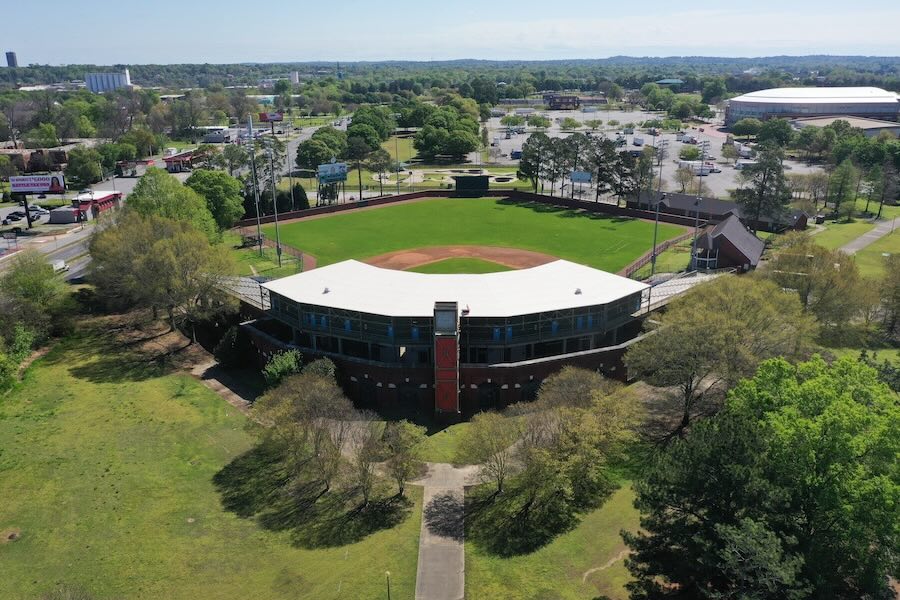
On May 12, 2026 — just days before this article was written — Columbus City Council unanimously approved $250,000 to hire a firm and create a master plan for the South Commons area around Synovus Park. Choose Columbus president Missy Kendrick told the council the explicit goal is to replicate The Battery Atlanta — the massive mixed-use entertainment district surrounding the Atlanta Braves stadium. Columbus has hired the same firm that designed The Battery.
The questions this series has been exploring in the abstract are now live policy decisions being made in real time.
The Question
Everything this series has discussed so far — the path of least resistance, the chilling effect, the equity gap between Uptown and the Liberty District — comes into sharp focus with one specific question: could the South Commons development plan be understood as private and public capital flowing away from the historic Liberty District neighborhood and toward an easier, lower-friction site just down the road?
The answer is: yes, it can be viewed that way. And the fact that Columbus city leaders are actively pursuing this vision right now — with $500,000 already committed to planning — makes this one of the most consequential development decisions the city will make this decade.
What South Commons Is — and What It’s Becoming
South Commons is a city-owned complex in South Columbus that currently includes Synovus Park (the newly renovated baseball stadium, home of the Columbus Clingstones Double-A Braves affiliate), the Columbus Civic Center, and a major softball complex. It is a large, contiguous parcel of public land anchored by existing sports and events infrastructure.
The vision Choose Columbus has put before the City Council is to transform the parking lots and open spaces surrounding these facilities into a full Battery Atlanta-style mixed-use entertainment district: hotels, restaurants, retail shops, apartments, and activity spaces all within walking distance of a professional baseball stadium.
What Is “The Battery Atlanta”?
The Battery Atlanta is the mixed-use development surrounding Truist Park, home of the Atlanta Braves, in Cobb County. It includes a hotel, hundreds of apartments, dozens of restaurants and bars, retail shops, and office space — all built to capitalize on the foot traffic generated by 81 home Braves games per year plus year-round events. It has become one of the highest-revenue developments in the Atlanta metro area.
Columbus hired the same firm that designed The Battery to develop the South Commons master plan. The aspiration is explicit.
The Paradox: One TAD, Two Very Different Neighborhoods
Here is where the story becomes structurally interesting. South Commons sits inside the boundaries of the 6th Avenue/Liberty District TAD — the same TAD that was created to revitalize the historic African American commercial corridor a few streets away. When the City Manager’s Office initiated the transition of the South Commons open parking space (Areas A, B, and C) into a mixed-use commercial development, the framework was passed via an official Columbus Council Resolution.
Within the legally binding “WHEREAS” clauses of that resolution, the city establishes its authority and boundaries by explicitly stating:
“WHEREAS, South Commons is part of the 6th Avenue/Liberty District Tax Allocation District (TAD)…”
Columbus Planning Department’s TAD maps settle this definitively — and it creates a significant policy paradox:
- Revenue generated by South Commons development goes into the Liberty District TAD fund.
- But the buildings, the hotels, the restaurants, and the foot traffic are all at South Commons — not in the historic neighborhood blocks.
- The TAD fund money would then most likely be reinvested back into South Commons — to build the parking decks, road upgrades, and utility expansions that a Battery Atlanta-scale development requires.
The historic Liberty District neighborhood — just a few streets over — would be generating none of the new development activity and potentially receiving little of the reinvestment, even though it is nominally covered by the same TAD.
Why Developers and the City Are Drawn to South Commons
This is not a conspiracy. It is basic development economics playing out exactly as Parts 3 and 4 of this series described. Three factors make South Commons dramatically easier to develop than the historic Liberty District blocks:
1. No Land Assembly Problem
To build a Battery Atlanta-scale project in the heart of the Liberty District neighborhood, a developer would need to assemble dozens of small, privately owned parcels — each with its own owner, its own title history, its own potential complications. Some properties have clouded titles from decades of inheritance without probate, meaning legal ownership is uncertain and courts may need to get involved. Others may have liens, back taxes, or environmental issues.
South Commons is already a single, contiguous block of city-owned land. The Development Authority can offer a developer a clean slate — one transaction, one title, no negotiation with dozens of private owners. That alone saves years and millions of dollars in pre-development costs.
2. No Displacement, No Controversy
Building luxury townhouses and boutique retail in the middle of a living neighborhood — as Parts 3 and 4 explored — brings community opposition, gentrification concerns, political friction, and the very real moral weight of displacing families who have lived there for generations.
South Commons has no residents. There is no one to displace. You can build the same luxury apartments and high-end restaurants on the parking lots around Synovus Park without triggering a single protest about community erasure. For an elected council that approved the funding unanimously without discussion, the political calculus is obvious.
3. Built-In Foot Traffic
The Battery Atlanta works because the Atlanta Braves draw over 2 million fans per year. The same principle applies at South Commons: Synovus Park, the Civic Center, and the softball complex provide a guaranteed base audience before a single hotel or restaurant is built. Private investors can model revenue projections against known event calendars — a far safer bet than building in a quiet residential neighborhood and hoping the foot traffic materializes.
The Equity Problem: A Tale of One TAD Used for Two Different Purposes
The South Commons development plan is financially rational and politically elegant. That is precisely what makes the equity question so important to ask out loud.
If development concentrates at South Commons:
South Commons generates the bulk of the TAD increment. Hotels, apartments, and restaurants at Synovus Park produce millions in new taxable value. The Liberty District TAD fund finally grows — not because the historic neighborhood is thriving, but because the stadium complex is.
That increment money cycles back into South Commons. The parking decks, road widening, and utility upgrades needed to support a Battery Atlanta-scale development are exactly the kind of infrastructure TAD funds pay for. The math is self-reinforcing: more development requires more infrastructure, and the TAD fund pays for it.
The historic neighborhood blocks wait. The 6th Avenue corridor — the original reason the Liberty District TAD exists — sees none of the new buildings, none of the foot traffic, and potentially little of the reinvestment. The TAD fund grew because of it, but for what purpose and for whom?
The City’s Counter-Argument — and Why It Deserves Scrutiny
The city’s position — implied, if not yet formally stated — is that a South Commons boom does benefit the Liberty District, because a rising TAD fund could eventually be directed toward the historic neighborhood blocks once the South Commons bonds are paid off.
This argument is not frivolous. A larger TAD fund does, in principle, provide more resources for community reinvestment. But it rests on several assumptions that residents of the Liberty District have good reason to examine carefully:
- Assumption 1: The TAD money won’t all be consumed by South Commons infrastructure. Battery Atlanta-scale development requires massive public infrastructure investment — parking, roads, utilities, stormwater systems. If the TAD fund is fully committed to paying those bonds, nothing flows to the historic blocks.
- Assumption 2: Future city leadership will actually direct remaining funds to the neighborhood. TAD fund allocation decisions are made by the city government of the day. A future administration has no legal obligation to prioritize the Liberty District neighborhood over the next attractive development opportunity.
- Assumption 3: The neighborhood will still be intact when the money arrives. If the South Commons entertainment district raises property values across the surrounding area — including the Liberty District residential and commercial blocks — the gentrification and displacement dynamics from Part 3 may play out on a faster timeline than any reinvestment arrives.
The Questions Columbus Residents Should Be Asking Right Now
The South Commons master plan is in its earliest stages. A master plan is not a commitment to build anything specific — it is a study that will recommend what to build and how. That means the window to shape the equity dimensions of this plan is open right now, before the development framework is locked in.
These are the questions worth putting to city leadership and the Development Authority:
| The Question | Why It Matters |
|---|---|
| What percentage of TAD revenue generated by South Commons development will be designated for the historic Liberty District blocks? | Without an explicit commitment — built into the TAD redevelopment plan — the answer is likely zero. |
| Will the master plan include any anti-displacement protections for Liberty District residents and businesses? | Rising property values from a Battery Atlanta-scale entertainment hub will affect surrounding neighborhoods. Are legacy business grants, affordable housing mandates, or senior tax protections part of the plan? |
| Will the community input process meaningfully include Liberty District residents — not just developers and tourism interests? | Choose Columbus noted that “as much public participation as possible” would be included in the master plan process. How that participation is structured — who gets invited, who gets heard — will shape the outcome. |
The Bottom Line
The South Commons development plan is a vivid real-time illustration of everything this series has described. Capital is moving toward the path of least resistance — a clean slate of city-owned land, no displacement risk, guaranteed foot traffic from a professional baseball team — and away from the complicated, fragmented, historically fraught work of revitalizing the Liberty District blocks themselves.
That does not make it wrong. A Battery Atlanta-style development at South Commons could genuinely benefit Columbus — economically, recreationally, and even potentially for the Liberty District if the TAD revenue is deliberately and specifically directed back toward the neighborhood. But “could” is doing a lot of work in that sentence.
The master plan process — underway right now — is where these commitments need to be made or not made. A master plan built around entertainment revenue maximization and a master plan built around community benefit for the existing Liberty District population will look very different from each other. Columbus is currently deciding which one it is building.
A Note on This Series
Parts 1 through 5 of this series have covered: what a TAD is and how it works; how TAD amounts are calculated and why some districts generate more than others; the racial and historical context of the Liberty District; the gentrification risk and how it can be mitigated; the tension between protective rules and developer flight; and now the specific South Commons question. Together, they provide a plain-English guide to one of Columbus’s most important and least understood policy tools at a moment when the city is actively deciding how to use it.
