

Fort Benning · August 2026
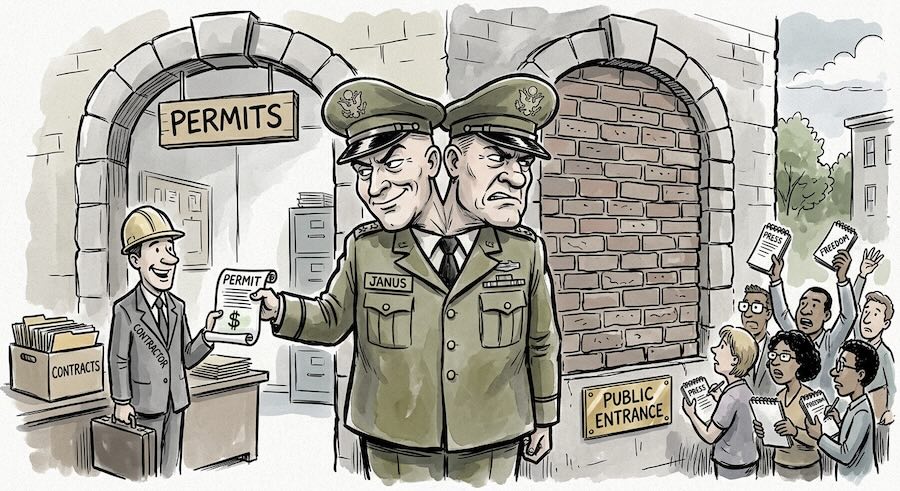
The Army picked Fort Benning for three small nuclear reactors. A company in California will build them, own them, and run them. The Army will be the safety regulator. It will also be the customer.
The short answer. There will be no license from the Nuclear Regulatory Commission. There will be no public hearing. The rules the Army will use are still being written, and the draft is not public.
The basics
On August 26, the Army named five bases that will get small nuclear reactors. Fort Benning is one of them.
The company is Radiant Industries. It is based in El Segundo, California. Its award is worth up to $750 million. It will build 15 reactors in all. Three of them are coming to Fort Benning.
Each reactor makes one megawatt of electricity. Three of them make three megawatts. That is the whole thing. It is not three reactors of three megawatts each, which is how some early reports read.
The money comes from a program called Janus. The deadline comes from an order signed by the President in May 2025. A reactor has to be running at some Army base by September 30, 2028.
Three megawatts is small
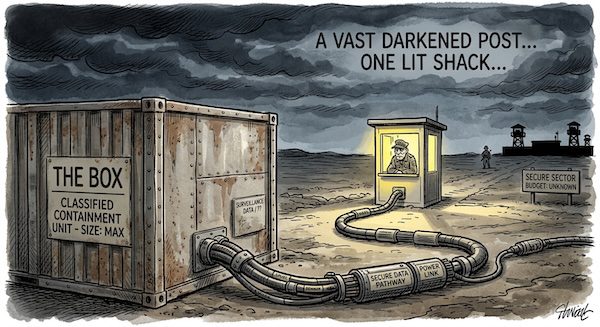
Radiant says one megawatt can power about 1,000 homes. So three megawatts is about the size of a subdivision.
Fort Benning is much bigger than that. It is the home of the Maneuver Center of Excellence. It adds about $4.8 billion a year to the economy on both sides of the Chattahoochee River.
The Army is not claiming the reactors will run the post. Jeff Waksman is a senior Army official for installations and energy. Here is what he said:
It will not be able to provide 100% of the power at any of these installations. If the grid fails, it will provide resilient power to critical infrastructure on the installations.
So this is backup power for a few important buildings. It replaces diesel generators. That is a real change and a real first. It is not a power plant next door to a neighborhood, and it helps to say that plainly before the argument starts.
Every day
If the grid fails
Backup, not baseload. The reactors do not power the post. They carry a small share day to day, and they keep a few important buildings running if the grid goes down. Because Fort Benning’s total demand is not public, nobody outside the Army can say how small that share is.
The Army checks the Army’s work
Most nuclear reactors in this country need a license from the Nuclear Regulatory Commission, or NRC. The NRC is an independent agency. It does not own the reactor and it does not buy the power. That is the whole point of it.
These reactors will not get an NRC license. They will get an Army permit instead.
This is not a new trick. A law from 1954 lets the military build and run reactors for its own use without an NRC license. A directive signed by President Kennedy in 1961 set up how it works. What is new is using that old power for reactors a private company owns, so the company can sell them to other customers later.
The office that hands out the permit is called the Army Reactor Office. It sits inside an Army agency. Above it is a council of Army officers. The Army also pays the bills.
A commercial reactor · NRC license
Fort Benning · Army permit
Three doors and none. Red marks every step where an ordinary person can see the paperwork or speak on the record. The commercial path has three. The Fort Benning path has none. Both paths end in a yes. Only one leaves a record the public can read.
One thing that is not true. It would be easy to say nobody is checking. That is wrong. The Army does require a safety report, an emergency plan, a security plan and a permit at every stage. There are real rules. The problem is that the rules are internal, the paperwork is not public, and the office applying them works for the buyer.
Someone outside is supposed to sign off
Here is a part of the story that has not been reported anywhere.
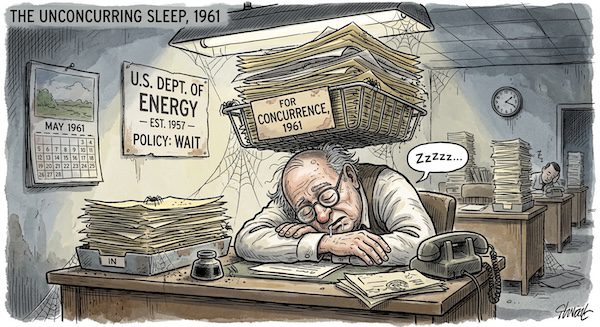
The 1961 directive did not leave the Army alone. It says the Army must get advice from the federal nuclear agency on reactor design and safety standards. It also says that “comment or concurrence shall be obtained” on whether those standards are good enough. If the two sides disagree and cannot fix it, the President decides.
A 1967 agreement added the details. The military has to hand over safety studies, operator training rules, and inspection reports. The outside agency can visit and inspect.
That agency was the Atomic Energy Commission. It no longer exists. Its power over these reactors went to the Department of Energy. That is not a guess. The Army and the NRC wrote it down in an agreement they signed in 2022.
So the Department of Energy is owed a sign-off on the Army’s safety standards. Whether it has given one for this program is not public. Nobody has asked.
One outside check really is missing, though. The Department of Energy also regulates its own reactors, so Congress created an independent watchdog for it: the Defense Nuclear Facilities Safety Board. Its reports are public. By law it only covers Energy Department sites. An Army reactor on an Army base is outside its reach, and the Army has no board of its own.
Two ways to build the same machine
One caution before you read this. The commercial rules are moving too. Congress and the White House have both told the NRC to speed up, and it has. This is not a fast process against a slow one. It is one process against another that is also being trimmed.
| Commercial reactor (NRC) | Fort Benning (Army) | |
|---|---|---|
| What you get | A license | A permit, good for 10 years |
| Who decides | An independent agency with no stake in the project | An Army office, under Army officers. The Army is also the customer |
| Is the application public? | Yes | No public file has been identified |
| Is the safety report public? | Yes, with security parts removed | No. It is required, but not published |
| Outside expert review | Required by law. Reports are public | An Energy Department sign-off is required by a 1961 directive. Nobody has shown it happened |
| Public hearing | Required. Held near the site, with three hours for public comment | None |
| Can neighbors object formally? | Yes, if they can show they are affected | No |
| Environmental study | Required, with public comment, though more shortcuts were added in April 2026 | Army rules require a study. A new federal shortcut may replace it. Which one applies has not been said |
| Emergency planning zone | A zone is set, with offsite plans and drills | None. There is a plan for the site, and a plan to tell the public during an emergency |
| Role for county emergency crews | Defined through the offsite planning process | Not written into the rule |
| Independent safety board | The NRC itself is independent of the owner | The federal nuclear safety board has no power over Army sites, and the Army has no equal |
| Are the rules published? | Yes, in federal regulations | The 2016 version is public. The 2025 rewrite is a draft and is not |
| Who sets the clock | The application, with a two-year limit set by Congress | A presidential order. Running by September 30, 2028 |
| Who owns the reactor | The license holder, who is the regulated party | The vendor, who is both the regulated party and the Army’s contractor |
Two rows do most of the work. On the commercial side, the safety case and the hearing happen in public, in front of people with nothing to gain. On the Army side, both stay inside the organization buying the power.
The last row is the one worth sitting with. Normally the regulator and the owner are different organizations on purpose. At Fort Benning the owner is a contractor, the regulator is the customer, and the customer has a deadline from the White House.
What changed, and when
Two things need saying first, or this next part reads as something it is not.
The Army’s power to regulate its own reactors is old. It rests on a 1954 law, a 1961 presidential directive, and a 1967 agreement the Army and NRC reaffirmed in 2022. None of that is new.
And the push to speed up nuclear licensing is not one party’s doing. A law passed in 2019. Another passed in July 2024 with votes from both parties and was signed by President Biden. That 2024 law, not any executive order, is what put a two-year limit on NRC hearings. A 2023 rule already let a small reactor’s emergency zone shrink.
What follows is what happened after January 2025.
The old authority · Bipartisan groundwork · Eleven changes since January 2025
Atomic
Energy Act
Kennedy
directive
Military and
AEC deal
Army rule
written
Licensing
law
Smaller
zones
ADVANCE
Act
Deadline
Each red mark is a published change to how nuclear projects get reviewed: environmental rules rescinded, shortcuts created, hearings reshaped, four executive orders, and a rewrite of the Army’s own reactor rulebook.
The shape is in the spacing. Nothing here was hidden. Every one of these changes was published. What is hard to see is how tightly they cluster, because no single notice announced the pattern, and none of them was published in Columbus.
The part worth reading twice
For almost 50 years, one set of federal environmental rules covered every agency. In 2025 those rules were thrown out. Agencies were told to write their own instead, and given until February 19, 2026.
The Energy Department published its new shortcut for advanced reactors on February 2, 2026. That was 17 days before the deadline. It took effect the same day it was published. Comments were accepted for 30 days after it was already in force.
Twelve state attorneys general said that order of events broke the law. Georgia’s attorney general did not join them. Neither did Alabama’s, and Alabama had a candidate site too.
Columbus was told. Columbus was not asked.
It would be easy to say this was sprung on Columbus. It was not.
The Army named nine possible sites on November 18, 2025, and Fort Benning was one. Stars and Stripes ran it that day. Georgia Public Broadcasting and Military.com ran it on November 24. The Ledger-Enquirer got a statement from Fort Benning’s public affairs director, Joe Cole, who said the post was “proud to learn” it had been picked.
So the news got here nine months ago.
What did not get here, then or now, was any mention of environmental review, public meetings, or the fact that no NRC license was involved. Both rounds of coverage were built on official statements. Neither asked how the decision would be made.
That is not one newsroom’s fault. When there is no hearing, there is no second story. A hearing is usually what makes reporters come back.
Two states, one river
Fort Benning sits on both sides of the Chattahoochee. Columbus’s backyard is also Phenix City’s backyard, and Russell County, Alabama’s.
A licensed reactor comes with an emergency planning zone. Someone draws a circle. Plans get written. The county emergency crews inside that circle get real jobs, money and practice drills. Two states inside one circle would mean two sets of duties and a rule that they work together.
The Army rule is different. It calls for an emergency plan, practiced once a year by the people who run the reactor. Its public-facing requirement is a plan to tell people during an emergency.
Tell. Not plan with. There is no circle, no radius, and no written job for a county.
Whether Muscogee County or Russell County emergency management has even been briefed is not public. Asking costs nothing.
Every abbreviation, in plain English
Nuclear policy runs on initials. Here is the whole set used in this story.
- ACRS
- Advisory Committee on Reactor Safeguards. Outside experts who review commercial reactor safety in public. The Army has no equivalent.
- AEA
- Atomic Energy Act of 1954. The law that set up nuclear rules, and that lets the military build reactors without a license.
- AR 50-7
- Army Regulation 50-7. The Army’s reactor rulebook. The public version is from 2016. A 2025 rewrite is in draft.
- ARO
- Army Reactor Office. The office that issues the permit. It sits inside the Army.
- Categorical exclusion
- A decision that a whole class of projects normally does no real environmental harm. It means no study and no public comment.
- CEQ
- Council on Environmental Quality. The White House office that used to write environmental rules for every agency. Its rules were rescinded in 2025.
- COCO
- Contractor owned, contractor operated. What Fort Benning is getting. The company owns and runs the reactor on Army land.
- DIU
- Defense Innovation Unit. The Pentagon office that runs the Janus program.
- DNFSB
- Defense Nuclear Facilities Safety Board. An independent watchdog with public reports. By law it covers Energy Department sites only, not Army ones.
- DoD
- Department of Defense. The Pentagon.
- DOE
- Department of Energy. It inherited the old Atomic Energy Commission’s power over military reactors, and is owed a sign-off here.
- EA / EIS
- Environmental Assessment and Environmental Impact Statement. The two kinds of environmental study. Both come with a public comment period. An EIS is the bigger one.
- EPZ
- Emergency Planning Zone. The circle on the map around a licensed reactor. It creates real duties for county emergency crews. There is none here.
- EO
- Executive Order. A written order from the President. Order 14299 set the September 2028 deadline.
- HALEU
- High-Assay Low-Enriched Uranium. Fuel enriched to between 5 and 20 percent. More than normal reactor fuel, far below weapons grade, which is above 90 percent.
- Janus
- The Army program buying these reactors. Up to $2.2 billion, five companies, five bases.
- MOU
- Memorandum of Understanding. A written agreement between two agencies about who does what.
- MW
- Megawatt. A unit of electric power. One megawatt runs roughly 1,000 homes. Fort Benning is getting three.
- NEPA
- National Environmental Policy Act. The 1970 law requiring the government to study the environmental effects of what it does, and to take public comment.
- NRC
- Nuclear Regulatory Commission. The independent agency that licenses commercial reactors. It has no role at Fort Benning.
- OTA
- Other Transaction Authority. A contract type that skips normal federal purchasing rules. Legal and common for prototypes.
- PNNL
- Pacific Northwest National Laboratory. An Energy Department lab. It wrote the technical basis for the Army’s new reactor rulebook.
- TRISO
- The fuel type these reactors use. Each grain is sealed in ceramic layers, designed to hold the radioactive material in.
Seven things anyone can ask for
Radiant says the exact spot at Fort Benning has not been picked yet. That means one decision is still ahead, and it is the one where asking still matters.
Every question below has a document behind it. None of them needs anyone’s permission.
- The legal opinion saying the Army’s old authority covers a reactor a company owns, and which presidential directive it rests on.
- The decision about who regulates a contractor-owned reactor at Fort Benning. Ask for the “Regulatory Tailoring and Engagement” determination by name.
- The draft 2025 Army reactor rulebook and its companion pamphlet.
- Any Energy Department sign-off on the Army’s safety standards, under the 1961 directive and the 1967 agreement, plus any inspection records.
- The environmental document for Fort Benning, and any record showing a shortcut was used instead.
- Fort Benning’s real power demand, and the list of buildings the three megawatts will serve.
- Letters between the Army and emergency management in Muscogee County and Russell County.
The deadline behind all of this is September 30, 2028. It came from an executive order, not from an engineering schedule. Deadlines like that squeeze whatever is easiest to squeeze, and public process is always the easiest thing to squeeze.
None of that is a claim that these reactors are dangerous. The Army official in charge said he would rather live near one of these than near a fuel farm, and on the physics he may well be right.
It is a claim about what you can see. There is an oversight system here. It is built from a 1961 directive, two agency agreements, an Army office, a council of officers, and a rulebook being rewritten by a national lab. Almost none of it is public. Not one piece of it has been shown to be working for Fort Benning.
The reactor will be regulated. It will be regulated by its customer, under rules still in draft, with an outside sign-off nobody has confirmed happened.
Columbus does not get a hearing. It does get to ask, in writing, before the spot is picked. That is smaller. It is not nothing, and there is a clock on it.
Sources: Columbus Ledger-Enquirer, Aug. 27, 2026 and Nov. 2025 · Executive Orders 14299 and 14300, May 23, 2025 · Army Regulation 50-7, Nov. 17, 2016 · PNNL-37613, “Army Reactor Program Regulatory Bases,” April 2025, prepared for the U.S. Department of Energy · Atomic Energy Act secs. 91b and 110(b) · 10 CFR 50.11 · Presidential Directive of Sept. 23, 1961 · DoD-AEC Memorandum of Understanding, 1967 · Army-NRC Memorandum of Understanding, 2022 · 42 U.S.C. sec. 2286g · 10 CFR 50.160 · Stars and Stripes, Nov. 18, 2025 · Georgia Public Broadcasting and Military.com, Nov. 24, 2025 · 91 Fed. Reg. 4,550, Feb. 2, 2026, Docket DOE-HQ-2025-0405 · Comments of the Attorneys General of Washington, California, Illinois, Maryland, Massachusetts, Minnesota, New Mexico, New York, Nevada, Oregon, Vermont and the District of Columbia, March 4, 2026 · Defense One and POWER Magazine, Aug. 2026.
